

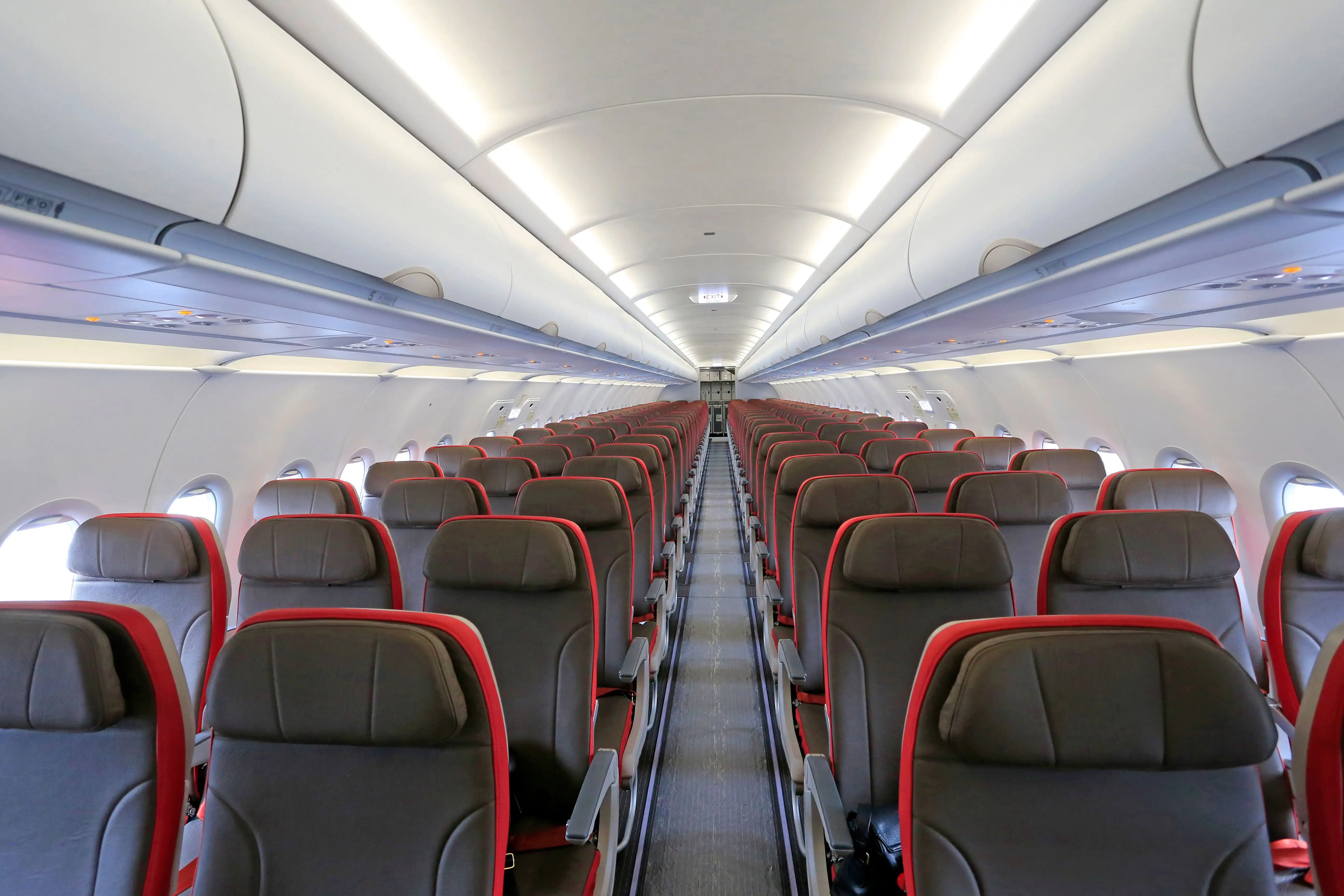
If a flight attendant has walked the aisle with an aerosol can in each hand shortly before landing, or the cabin was sprayed after the doors closed, you have seen aircraft disinsection. It is an insecticide treatment required by a number of countries on arriving aircraft, and it has been part of international flying for decades. Here is what is in the can, why it is done, and how it is handled differently on a private aircraft.
Why do they spray insecticide on planes?
Because the country you are landing in requires it. Mosquitoes and other insects travel well in an aircraft cabin, and several countries, especially islands and places free of particular mosquito species, require arriving aircraft to be treated so that insects do not arrive with the flight. The requirement is set by the destination under international health rules, and the airline or operator has to show the arrival authority that the treatment was done. It is a public-health and agricultural measure, not a cleaning step and not a response to anything on your particular flight.
What are they spraying?
A synthetic pyrethroid insecticide, from the same family as many household insect sprays, in an aerosol can made for aircraft cabins. The World Health Organization publishes the methods, the products and the doses in Aircraft Disinsection Methods and Procedures, 2nd edition (2023), and the countries that require disinsection refer to that document. In the United States only an EPA registered aircraft insecticide may be used, and the dose is set by the cabin volume, which is why the crew sprays in a steady walk from one end of the cabin to the other rather than at any one place.
Why was my plane sprayed before takeoff, or before landing?
Those are two of the methods the WHO recognizes. Spraying after the doors close and before pushback is called pre-departure or blocks-away treatment. Spraying in flight, in the last part of the cruise, is the in-flight method. Both are done with passengers seated, and both are accepted by many of the countries that require disinsection. A third method treats the empty aircraft at the departure airport before anyone boards; that is pre-embarkation disinsection, and it is what we perform on business and charter aircraft, because nobody is in the cabin when the spray is applied.
Is the spray safe?
The WHO has assessed the products and doses it lists and considers them appropriate for use in occupied cabins when applied as directed, and the aircraft insecticides registered in the United States carry EPA labels for that use. Some passengers notice the smell or a brief irritation, and people with respiratory sensitivity sometimes prefer to cover their nose and mouth during the walk-through. If that is a concern for you, a private aircraft treated empty before boarding avoids the question entirely: the cabin is ventilated and boarded after the required wait, and no one is aboard during the application.
Which flights get sprayed?
Flights into countries that require it. Australia, New Zealand, the Cook Islands, Fiji and the Solomon Islands require it on arrivals from the United States; so do Italy and Greece on flights from countries where the mosquito that carries dengue is present, which includes the United States; so do India, Bangladesh, Brunei, Macau and the Philippines, and Barbados, Brazil, Chile, Paraguay and Uruguay in the Americas, and Egypt, Morocco, Mauritius and the Seychelles. The rules differ in detail, and some apply only to certain routes or seasons. We keep a country by country table of aircraft disinsection requirements, verified from each country’s published rule.
Can passengers opt out?
Not on an airline. The treatment is a condition of entry set by the arriving country, and the US Department of Transportation publishes the list of countries that require it so passengers know in advance. On a private or charter aircraft the operator chooses the method, and choosing pre-embarkation treatment means the question never comes up: the aircraft is treated empty at the departure airport, ventilated, and boarded after the required wait, and the crew carries the certificate the arrival authority asks for.
How is it different on a private aircraft?
An airline station can spray a cabin full of passengers because the methods allow it and the schedule demands it. A business aircraft has a better option. Pre-embarkation disinsection is performed on the empty aircraft at the US departure airport, by licensed applicators, with an EPA registered aerosol at the WHO dose, and the aircraft arrives with the certificate, the General Declaration entry and the used cans retained on board. The passengers never see a can. That is the method we perform at any US departure airport, nationwide, and the reason we built the service around it.
The short version
The spray on your flight was aircraft disinsection: a WHO-listed insecticide applied because the country you are landing in requires it. It is routine, it is regulated, and on a private aircraft it is done before anyone boards. If you operate an aircraft and want to know whether your next destination requires it, our explainer on what aircraft disinsection is and the requirements table are the places to start, and we are a message away.