

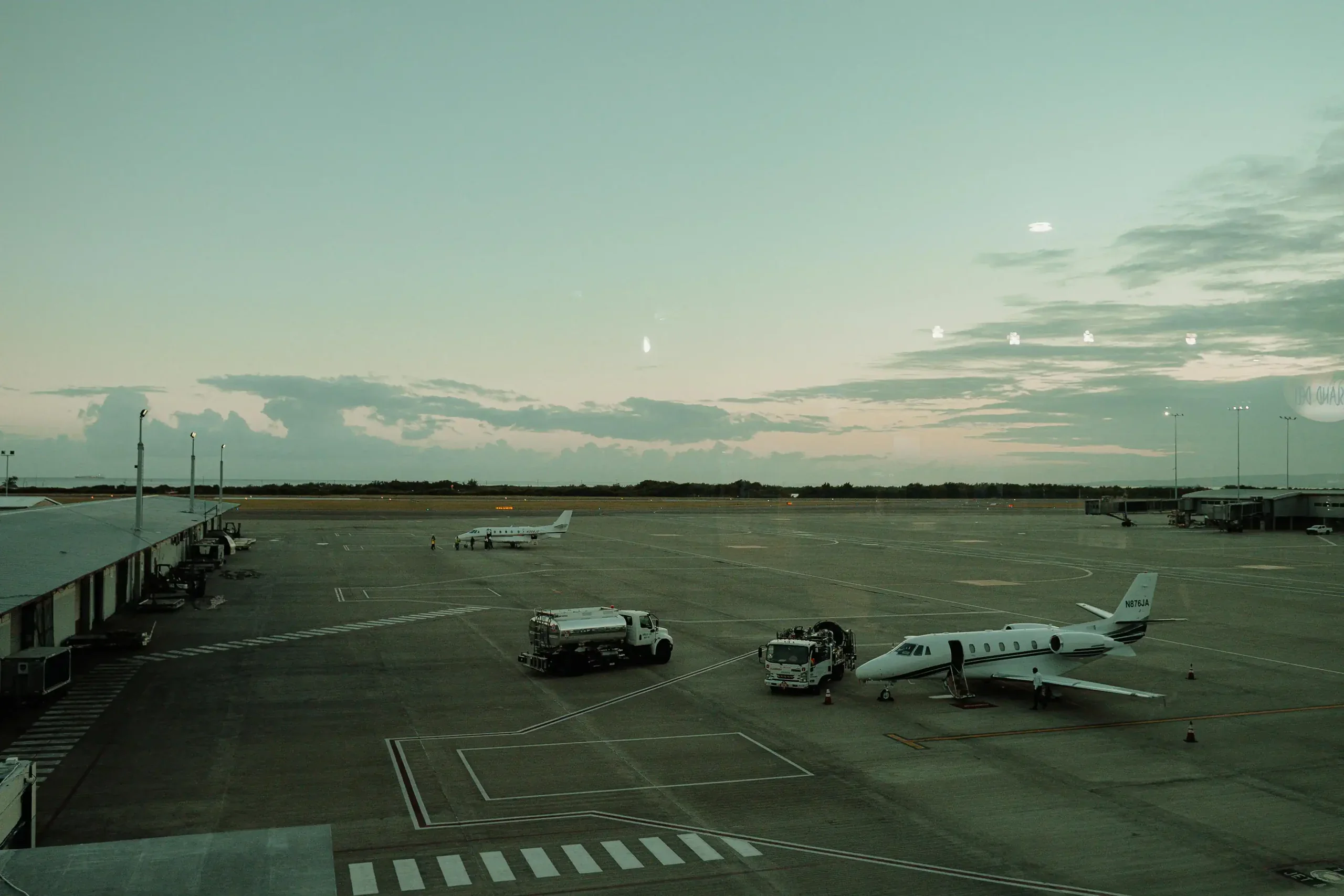
Every operator who has been through it tells the story the same way: the flight was fine, the handling was fine, and then the aircraft sat at the gate with the door closed while an inspector sprayed the cabin over the passengers’ heads. Here is what arriving without a required disinsection actually involves, and why it is entirely avoidable.
Aircraft disinsection on arrival, with passengers aboard
Where a destination requires disinsection and the arriving aircraft cannot show a verified treatment, the standard response is on-arrival disinsection. The aircraft is treated after landing, before unloading and before anyone disembarks, under the supervision of the arrival authority’s officers. Passengers are in their seats. The aerosol is applied through the cabin, the doors stay closed for the required period, and only then does disembarkation begin.
It is a recognized WHO method and the products are approved for it. It is also the least pleasant way for a principal to experience an international arrival.
Delay
On-arrival treatment happens on the authority’s timetable, not yours. An officer has to be available, the aircraft has to be treated, and the required period has to elapse. On a busy ramp, or outside normal hours, that can stretch. Ground transport waits. Meetings slip.
Cost
Several countries charge the aircraft operator for on-arrival treatment. Some require the operator to supply the aerosol cans. Either way, the operator pays for a treatment it could have controlled, at a time and place it did not choose.
Compliance consequences
Australia, to take the clearest example, expects operators on formal arrangements to report their disinsection before arrival and requires operators to report when disinsection has not been done. Failing to report can result in non-compliance action. Repeated arrivals without treatment are noticed. For a charter or management company, that is a reputational problem as well as an operational one.
Refusal
In some places an aircraft that cannot be treated to the authority’s satisfaction can be held until it is, or refused. It is rare, but it is on the table.
How to never find out
Know before you file whether the destination requires disinsection, and if it does, have the aircraft treated before departure. For a non-stop flight from the United States, pre-embarkation treatment of the empty aircraft at your departure airport, before boarding, produces the certificate the arrival authority wants to see. The aircraft lands compliant, the officer reads the paperwork, and the passengers never know there was a question.
If you are not sure whether your destination requires it, that is exactly the question to send us. Destination, departure airport, date. We will tell you plainly.